
How Do You Honor your Identity in a Rapidly Changing World?
Written By: Christian Talbot, President, Middle States Association | Published January 5th 2025
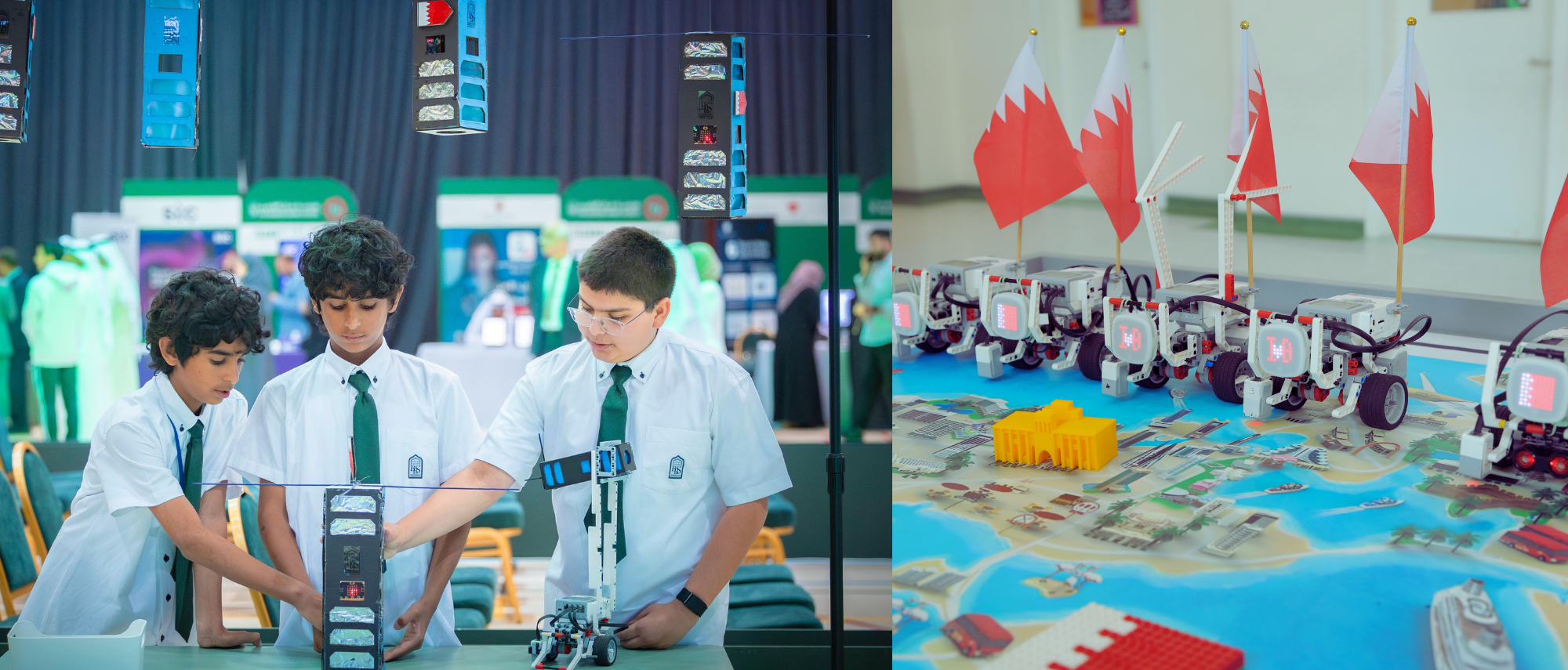
Source: Bahrain Bayan School
It’s hard enough to prepare young people for an AI-shaped future.
But how do you do that while preserving their identity?
What about strengthening that identity?
Those are the stakes at Bahrain Bayan School, where most students are Bahraini and every decision about curriculum, technology, and student support is a decision about the country’s future.
With AI advancing at an exponential rate, Bayan sought a solution in the Middle States Responsible AI in Learning (RAIL) endorsement in AI Literacy, Safety & Ethics.
The end result? Bayan amplified their core identity using the endorsement’s implementation framework, called the Pace Layer Model.
Layer 1: Lighting the Way with Culture & Identity
Bayan started where all durable change begins: Culture & Identity.
Culture & Identity is the foundation of the Pace Layer Model. It is the place where a school’s “source code,” or DNA lives.
For Bayan, this means first and foremost “rooting, identity, and culture.” Those values frame every initiative, because nearly all students are Bahraini.
“All our students are Bahraini nationals… these students will go back and be active members in their community and in different work,” says Director of Digital Strategies and Innovation, Tamara Fakhoury.
Many schools make the mistake of letting AI edtech companies drive the agenda. By contrast, Bayan declared “rooting, identity, and culture” as the North Star values for AI, because the Pace Layer Model prompted them to start with their “why.”
Layers 2 and 3: Enabling Wise Change through Governance & Infrastructure
Having doubled down on their core values to guide their AI work, Bayan was ready to attack the next layer: Governance.
We often see schools writing AI policies that sound wonderful but don’t survive first contact with the realities of the classroom. Case in point: policies may attempt to enumerate “academic integrity” even when members of the same academic department can’t agree when AI use is permissible, much less useful!
To preserve their commitment to the values that ground their identity, Bayan took a different approach to governance. Three different groups of stakeholders look at policies and initiatives to ensure that “rooting, identity, and culture” guide everything.
For example, an educational technology or academic team might propose a use for AI in learning. Then the school’s senior leadership and board consider the policy implications. After that, an advisory committee provides feedback on implementation opportunities and challenges.
That sounds great, but after those policies and initiatives go live, where do the faculty and staff find support? This is where so many schools stumble.
Enter the Pace Layer Model’s Infrastructure layer.
Bayan has named “AI champions” in each division so that everyone has a trusted go-to person for questions and ideas about AI. Bayan maintains its commitment to “rooting, identity, and culture” by ensuring that adults who support Bahraini students every day are also the ones shaping how AI shows up in their learning.
Layers 4 and 5: Growing Students and Adults with Programs & Practices
With Culture & Identity, Governance, and Infrastructure properly designed, Bayan moved to the final two layers in the Pace Layer Model: Programs and Practices.
When it comes to national identity, the program in professional learning is a critical commitment—especially for native Arabic-speaking staff who have ideas and questions about supporting students’ Bahraini identity in a world of increasingly abundant AI that often feels like it’s fostering homogeneity, generic “AI slop”—problems exacerbated by the fact that most major LLMs are primarily trained on data from Western countries.
Bayan opens the school year with full-day professional learning, then continues with weekly Thursday sessions that keep growth visible and shared. Short “tech bite” emails give teachers quick, low-friction ideas they can try without carving out extra time.
But Bayan knows that the school cannot be solely responsible for cultural identity in an AI world. That is why they have designed learning programming for parents, too. Through Digital Parent Connect and other family learning events, parents participate in conversations about emerging topics like AI.
A community that learns together—at every layer
Bahrain Bayan School is not just “doing a lot of good things.” With the help of the Pace Layer Model, it is smartly sequencing change:
Culture & Identity define what progress should look like for a national school.
Governance & Infrastructure translate that clear identity into value-driven policies and supported work.
Programs & Practices—for teachers and families—explore that identity through professional learning.
If you’d like to go deeper into how Bayan is applying this approach specifically to AI and RAIL, watch for our upcoming feature in The AI Brief, where the school will share their ethics-driven AI learning design and structures in more detail.
