
Sleight of Hand
Written By: Christian Talbot, President, Middle States Association | Published December22nd 2025
Choose the correct answer:
College admissions is more like:
(a) stage magic
(b) a black box
You can be forgiven for guessing “black box.” Unless you work inside a college admissions office, the process seems inscrutable.
But the answer—as far as I’m concerned–is “stage magic.”
Magicians have mastered sleight-of-hand. The fancy word for that is “prestidigitation.” And prestidigitation shares the same root as a word at the heart of college admissions:
Prestige.
Consider the etymology:
Prestige (noun): 1650s, from the French, meaning “deceit, imposture, illusion”; originally from the Latin praestigium, meaning “delusion, illusion.”
As 12th graders receive admissions notices from early decision and early action applications, I’m thinking about the role of prestige in college admissions.
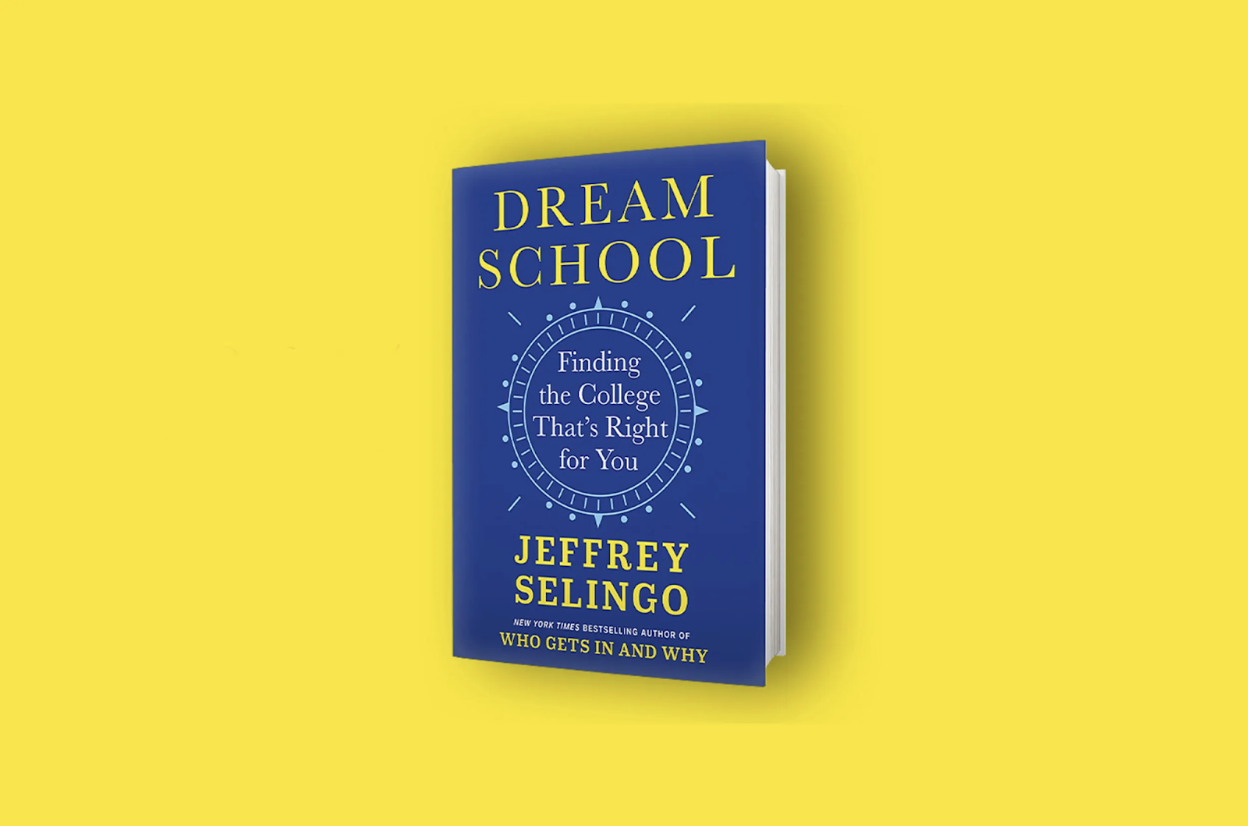
But I’m also thinking about it because last week I interviewed Jeff Selingo for Evolution Stories (episode to air in January).
Jeff’s latest best seller, Dream School, is a must-read on college admissions. It exposes the illusions of the prestige game while offering a playbook for thriving in college and beyond.
As a former head of school at two college prep schools and as a consultant to many more, I am keenly aware that families choose schools expecting a return on their investment.
In high schools, that ROI is usually equated to college admissions outcomes.
And college admissions outcomes are usually equated to the prestige of the colleges and universities admitting the school’s 12th graders.
But seeking prestige is more like buying an insurance policy against a terrible downside. It hardly guarantees above-average outcomes that parents are betting on when they invest in their child’s education.
Consider this excerpt from Dream School in which Selingo breaks down the findings from a 2024 Harvard University study:
“The average income of Ivy-plus graduates wasn’t that different from those who attended selective public flagships, such as Ohio State, the University of Florida, the University of Georgia, or UCLA. [...]
“Imagine a group of a hundred friends, each representing a college graduate, divvying up lottery tickets. Each ticket represents a change at a highly successful career—let’s say, ending up in the top 1 percent of earners. The graduates of public flagships each get one ticket, while those who went to an elite college get two tickets. [...]
“Attending an Ivy League school does open more doors—that’s the extra lottery ticket. But it’s not a guarantee of extraordinary success, nor does attending a different school preclude you from achieving great things.”
Jeff then points out that Fortune 500 companies are run by alumni from 378 different colleges, including Ball State, Kettering University, Louisiana State University, Ohio University (not Ohio State), San Diego State University, and many more schools that you may or may not recognize.
Would any of this seem obvious from the discourse around college admissions? Parent forums on social media would suggest a resounding no.
Fortunately, Jeff does more than expose the prestige trap. He is also an expert in the intersection between higher ed and the work force. In his most recent issue of NEXT, he wrote:
“What gets you closer to a lottery win are durable skills:
Discernment: knowing what matters and what doesn’t in a world of constant information and distraction.
Getting things done: turning ideas into action and moving work forward without perfect instructions.
Problem-solving: especially when the problem isn’t clearly defined and there’s no obvious playbook.
Negotiation: understanding how to navigate disagreements, trade-offs, and expectations in a way that moves things forward.
Networking: not collecting contacts, but building relationships rooted in curiosity, trust, and follow-through.”
As always, we are placing a bet on kids’ futures by the way we design school.
Are you betting on prestige so that your students have a chance at maybe getting a second ticket in a lottery?
Or are you betting on durable skills as the key to their lifelong thriving?
While you wait for Jeff Selingo’s episode to drop in January, watch our latest episodes of Evolution Stories with school leaders who share stories of change projects that failed and those that succeeded—and why.
