
Blog

What happened when a school stopped asking what AI could do?
Pinewood American International School finished its first RAIL endorsement with strong frameworks, but wider faculty engagement hadn't yet taken hold. The challenge wasn't a lack of effort. It was that the school had been treating AI as a technology question when it needed to be a purpose question. What happened next, from a new Portrait of a Graduate to dinner with an AI-generated Lenin, shows what changes when a school answers identity before it answers tools.

Chatbots vs. Cheatbots
AI made it easier than ever to skip the hard work that produces real learning. Carl Hendrick calls this a "learning-architecture problem," and it reframes the whole AI-in-schools debate. Here's why powerful learning has to be designed before AI gets handed to students, not after.
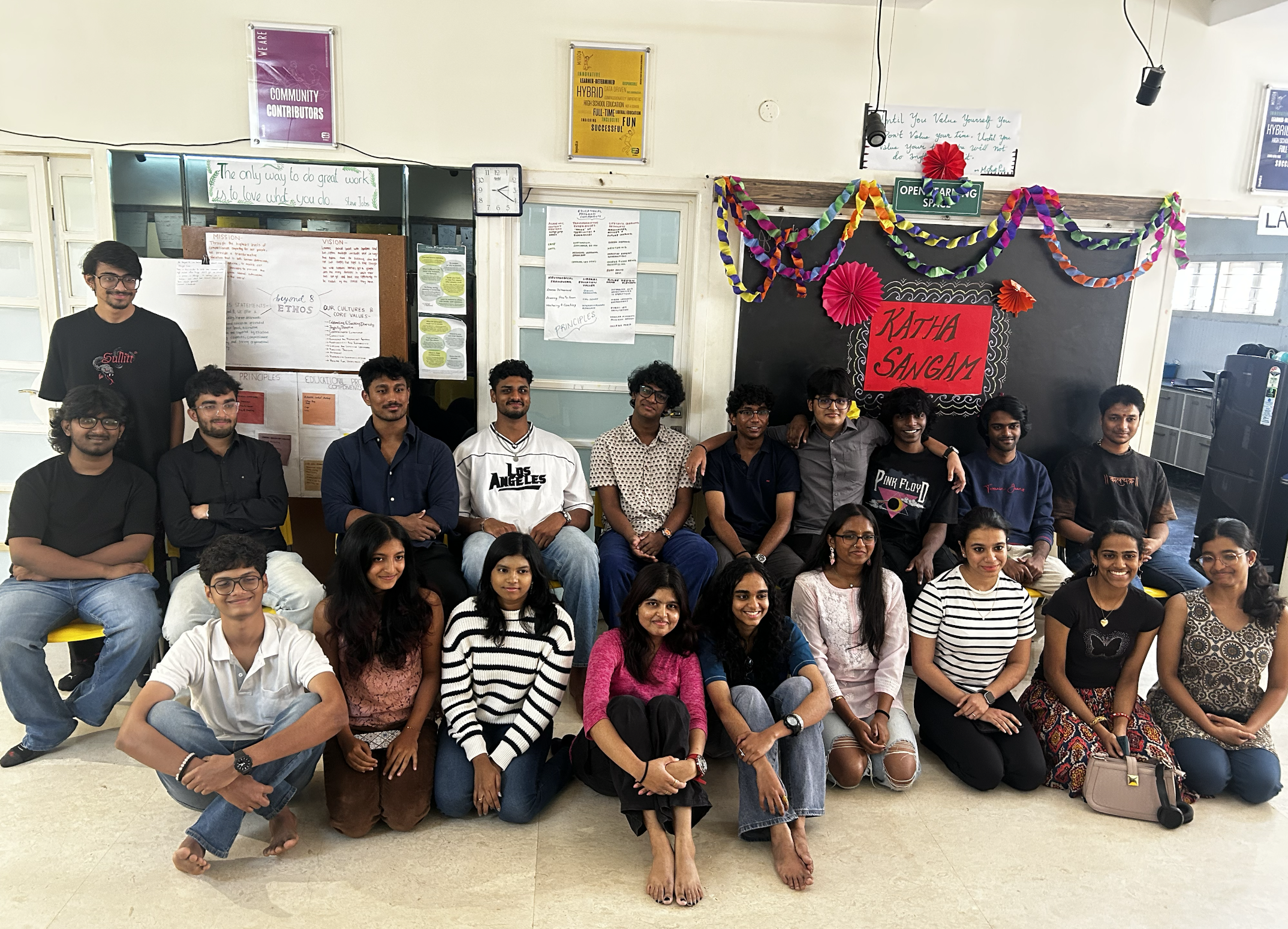
Beyond 8: What Happens When a School's Values Are Clear Enough That Every Technology Question Has an Obvious Answer?
Beyond 8 built its AI scheduler and classroom tools around a decade of clarity about who each learner is, then caught an AI-generated intervention plan that got a student wrong and handed the decision back to her. Read how RAIL helped this school formalize the human-led AI philosophy it already had.
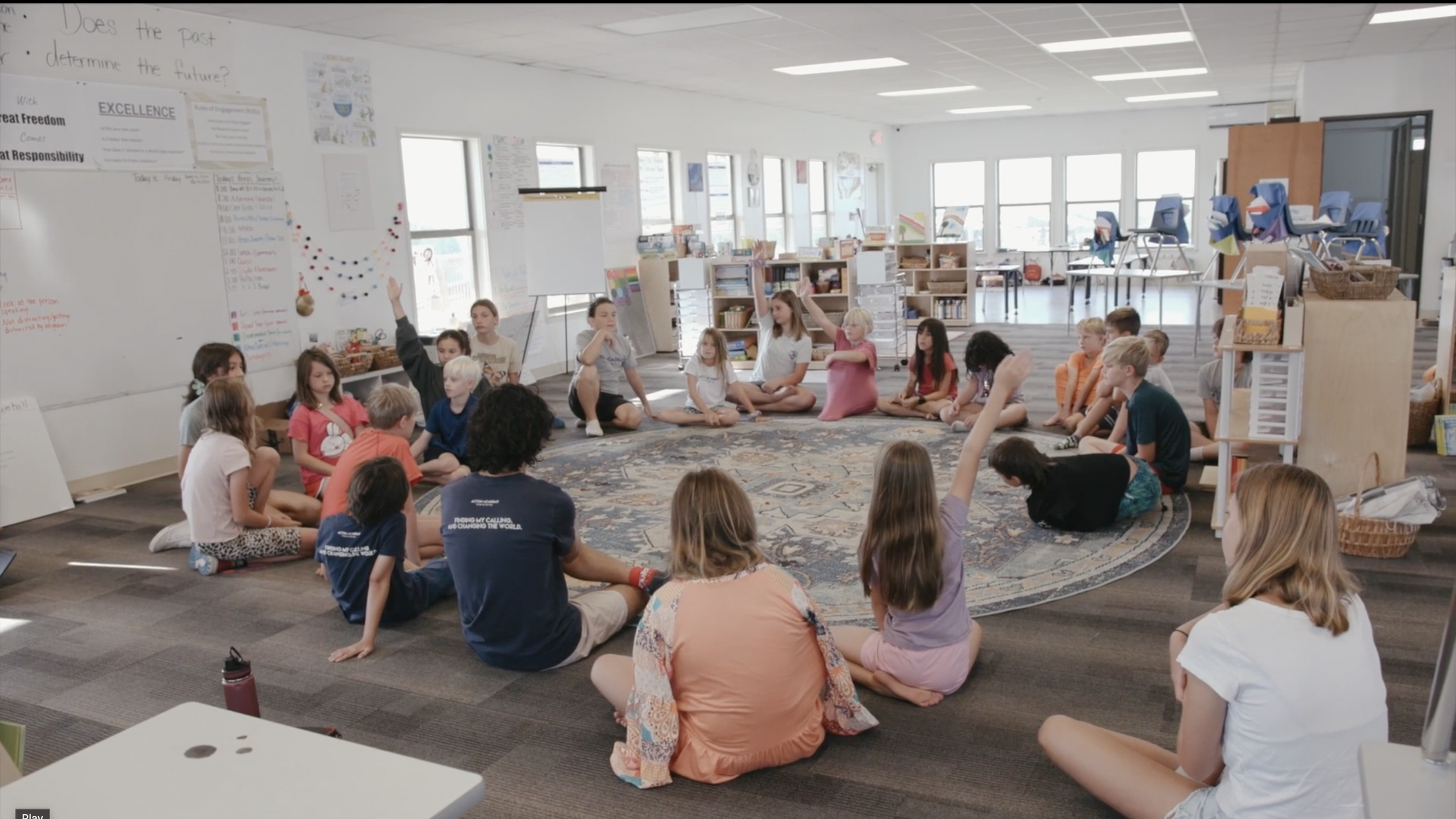
When Traditional Accreditation Threatens Your Model: How one school unlocked ESA funding while preserving its learner-driven studios
When Tennessee passed ESA scholarship legislation requiring accreditation, Acton Academy Johnson City faced a real threat: most accrediting bodies assumed traditional staffing and pedagogy. MSA's microschool pathway helped founder Sarah Fagerburg formalize her model without abandoning it. The result: projected 3x revenue and a doubled waitlist, with guides still coaching, not lecturing.
“I Don’t Know What I Don’t Know”: How One Indiana Founder Turned a Scrappy Microschool into Something Built to Last
She had a vision, a community, and zero roadmap. Starting a microschool means making decisions you don't yet know how to make. Here's how one Indiana founder turned that uncertainty into a school built to last.

Permission to Be Who We Are: How The Mission Academy Unlocked Choose Act Funding Without Changing Its Model
Every time a new family walked through the door at The Mission Academy, the first question was the same: "Are you accredited?" For three years, Tiffany Jones had to piece together an answer. Now she has three words: "Yes, we are."

3 Governance Findings, 1 Failure Mode
We know that the average tenure of international school heads is less than 5 years, and that governance drives that dynamic.
At Middle States and AISH, we witness governance through a broad lens: between us, we have over 3700 members in 150 countries.
We believe that governance has become a critical lever for international schools, so we decided to do something about it. And those efforts start with diagnosing the dimensions of the challenge.
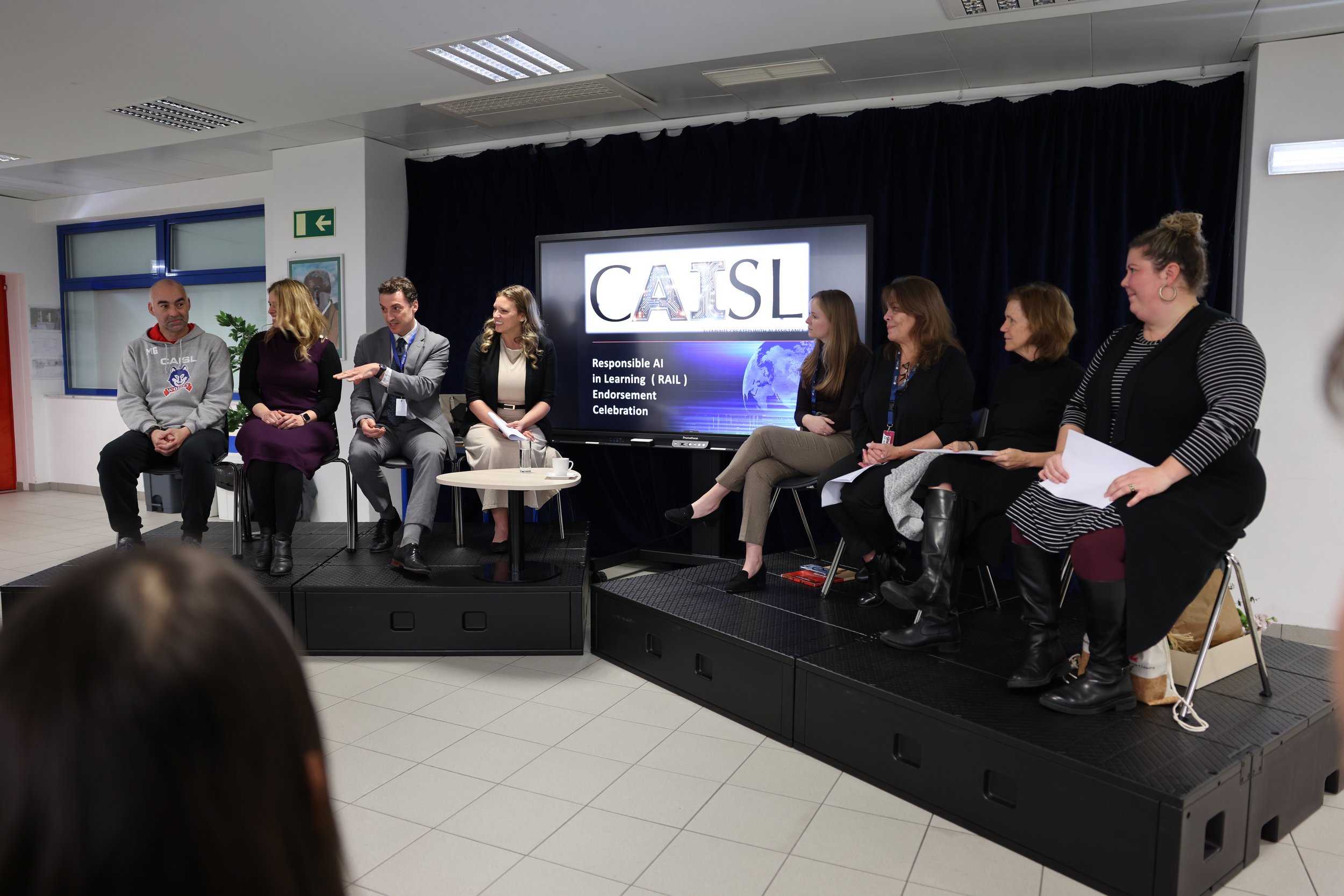
The Conversation Before the Policy: How CAISL Built AI Trust with Parents
Parents had questions CAISL couldn't yet answer with a policy. So instead of waiting, they opened the room — to faculty, to students, and to the parents themselves. Here's what happened when a school decided trust was the framework.
Support Without Strings: How Lighthouse Christian Academy Earned Accreditation and Kept Its Identity
They needed accreditation but feared what it might cost them. Lighthouse Christian Academy didn't want a credential that required them to become a different school. Turns out, they didn't have to.
When Thinking becomes the Work: Excellence in Learning at American School of Milan
The school had strong outcomes — but couldn't always articulate what was driving them. Through the accreditation process, American School of Milan found language for what they were already doing well, and clarity on what to do next.
Make the bug a feature: At Episcopal Academy, the conditions came first
We kept hitting the same wall: we had faculty willing to try AI, but no shared language for what "good" looked like. Episcopal Academy didn't wait for the perfect policy. They built the conditions first — and let the tools follow.
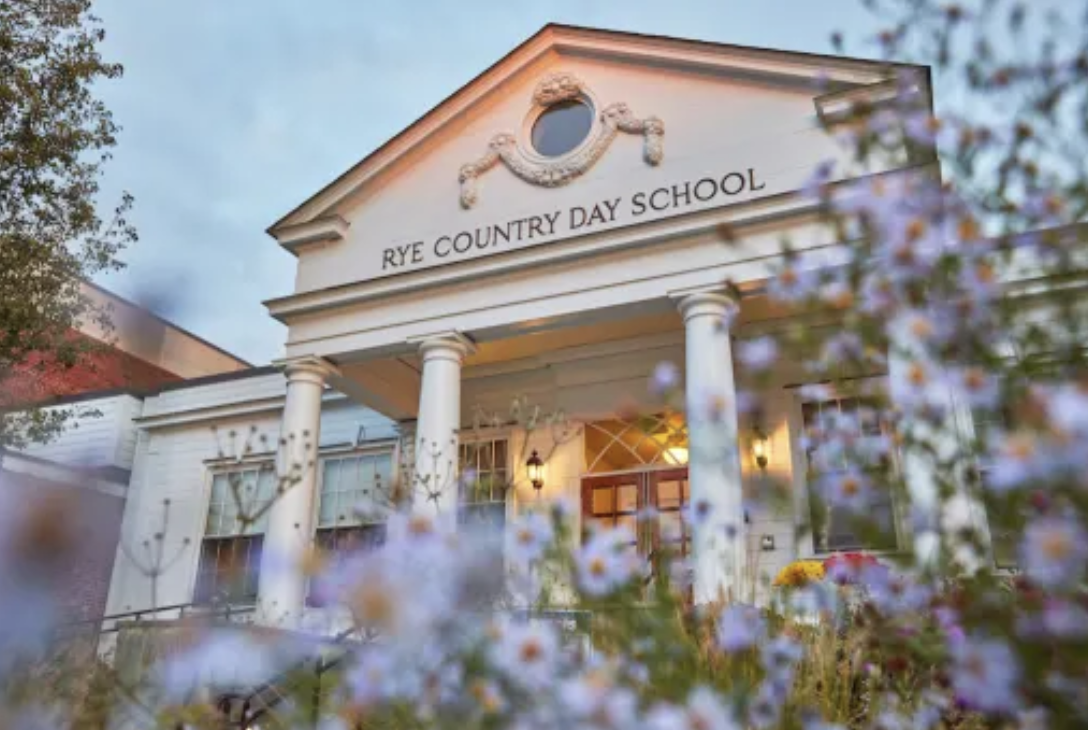
Skills First, Technology Second: How Rye Country Day School Built AI Around Competency-Based Learning
The tools arrived before the question did. Rye Country Day School paused and asked: what do we actually want students to be able to do? The answer changed everything about how they brought AI in.
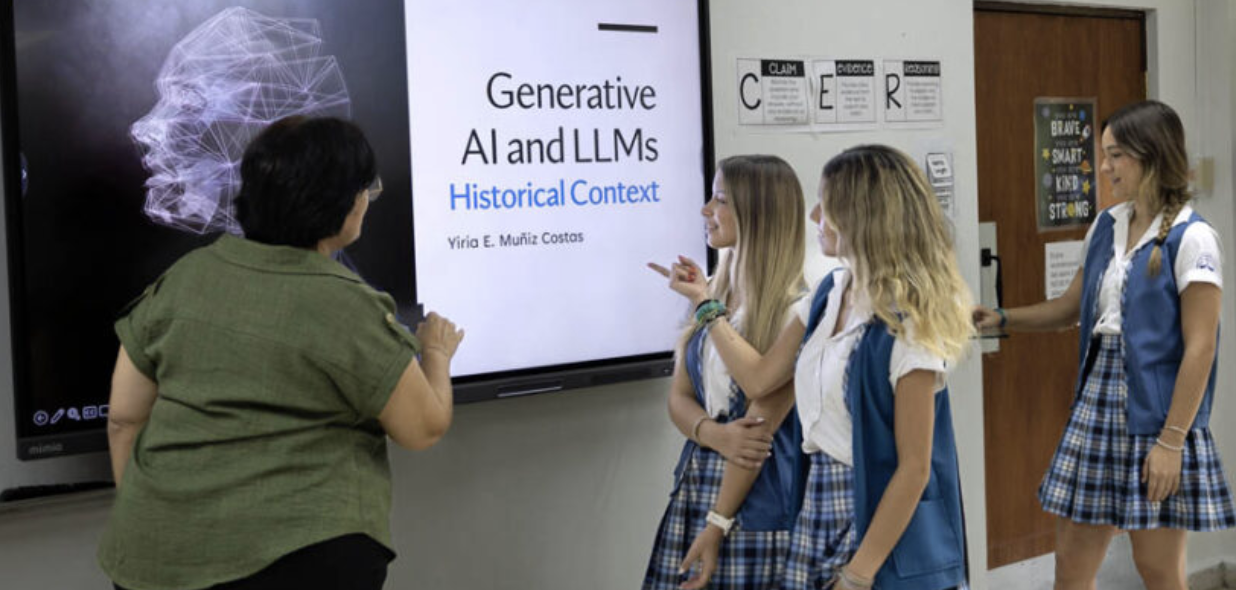
AI in Their Pockets, Values on the Line: A Catholic School and Its Partner Step Up
Students already had AI in their hands. The question wasn't whether to address it — it was whether the school's values would show up in how they did. Here's how one Catholic school decided not to look away.
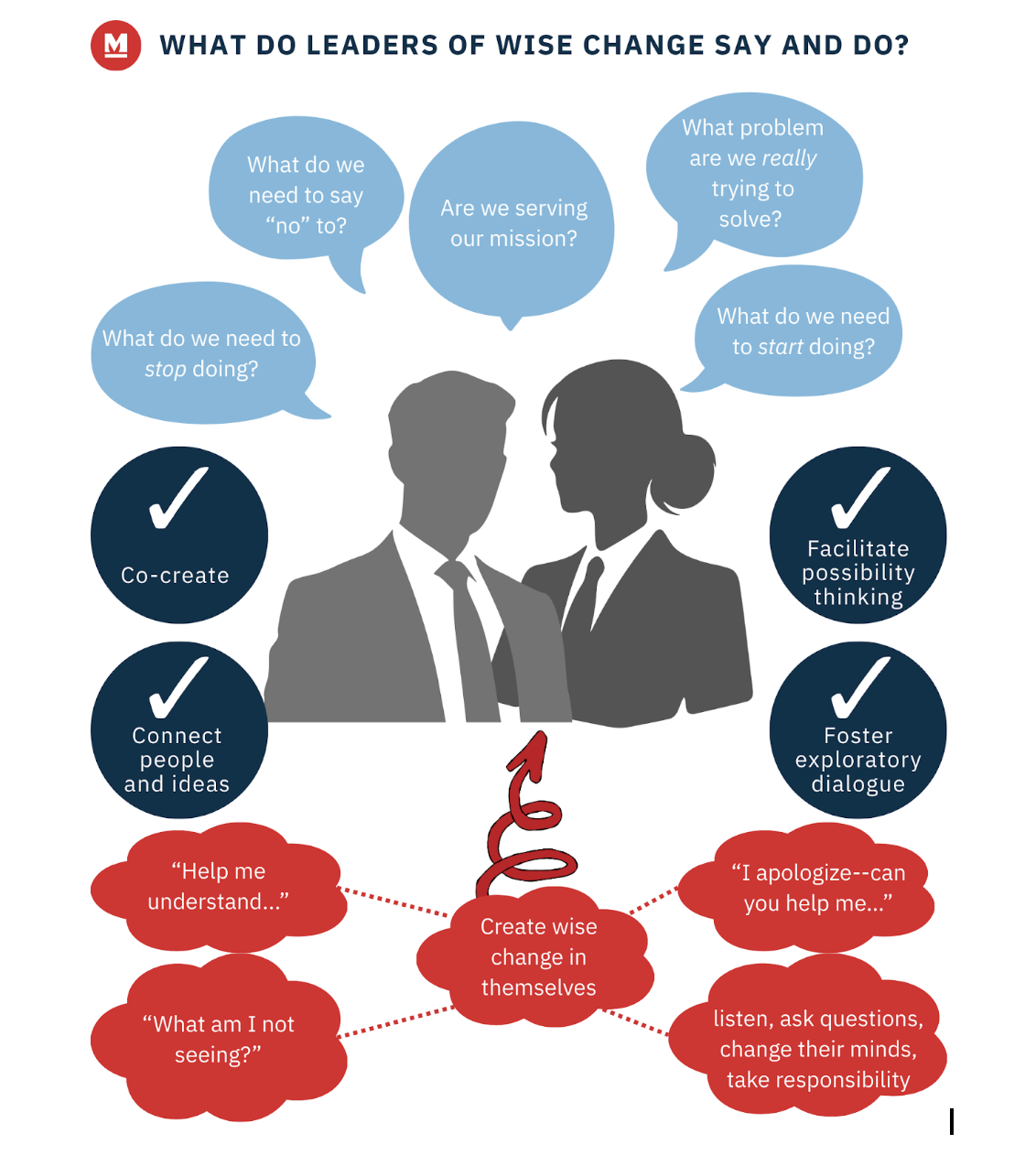
What is Wise Change in K–12 Schools? A Practical Definition with Examples
You have heard us talk about wise change a lot this past year.
But what does it mean, exactly?
Let’s consider a few examples.
When Flourish Schools came to us and said, “We are creating a microschool network based on joy and experiential learning,” we said, “Tell us more.” They explained, “We need faster and nimbler accreditation to make it available at no cost to families.” Through Next Generation Accreditation, Flourish has changed from not being open to doing breakthrough work with their first cohort of students.
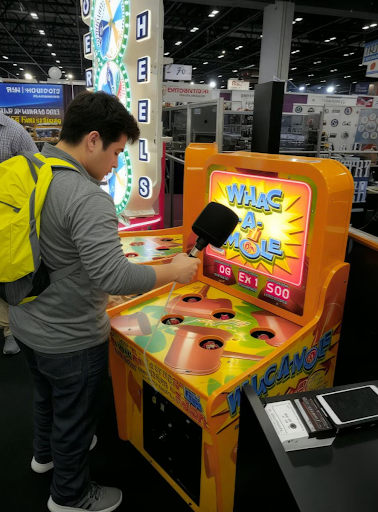
From AI Training to AI Policy: The K–12 Whac-a-Mole Problem
Have you ever played whac-a-mole? The game used to be a mainstay of arcades and boardwalks. One mole pops its head up. You strike it with a mallet, which sends it underground. But as soon as it disappears, a different mole pops up somewhere else on the gameboard. Repeat until time runs out on the game. AI in schools is a whac-a-mole problem.

Who Is Gen AIC? Understanding the Students Growing Up With AI, COVID, and Educational Disruption
According to conventional wisdom, students currently in high school are part of Gen Z or Gen Alpha. Gen Z, as in “Zoomers,” because many experienced school on Zoom during the COVID pandemic. Gen Alpha, as in “alpha,” because they are the first generation born entirely in the 21st century. I see them as Gen AIC, because they are coming of age amidst the two great paradigm shifts in school: AI and COVID.
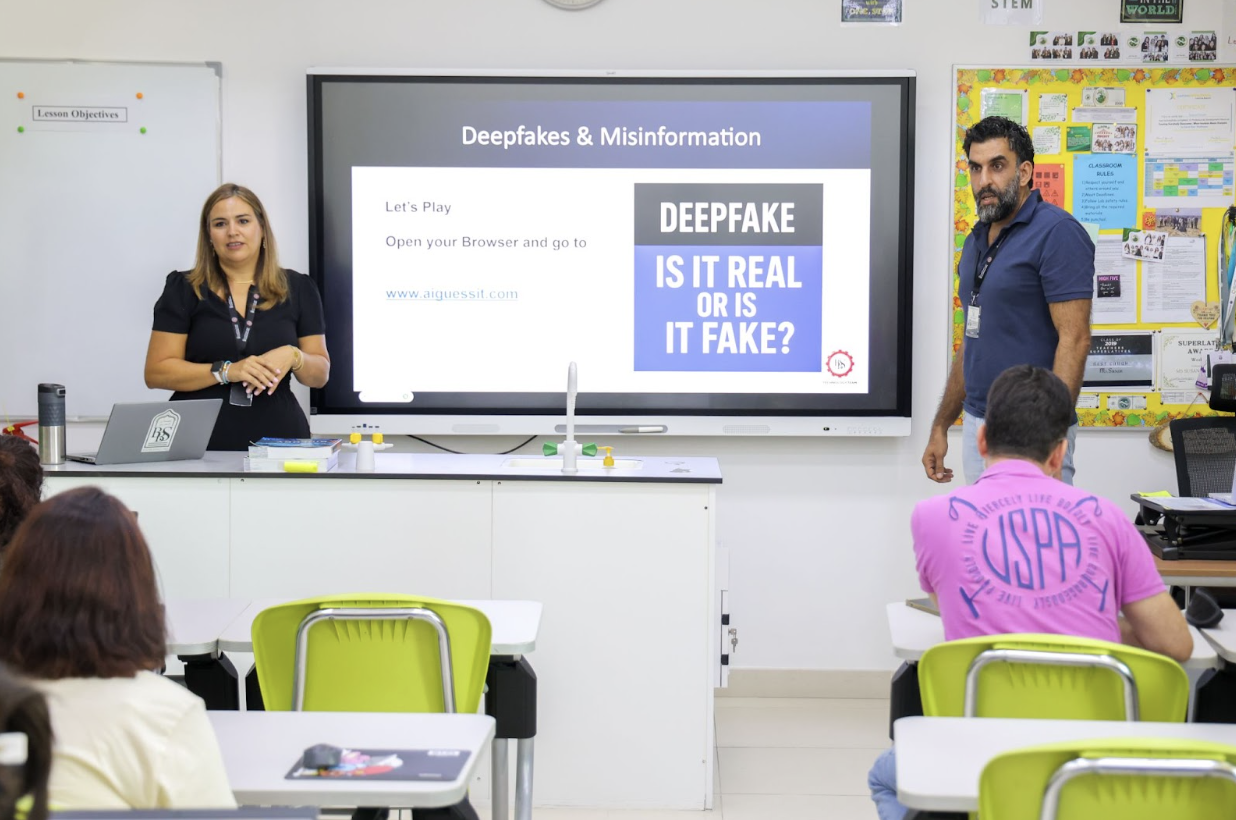
RAIL in Action: How Bahrain Bayan School Built Human‑Led, AI‑Informed Systems
In an international context, the pressure to adopt AI fast is real. Bahrain Bayan School chose a different path — building systems where humans lead and AI informs, not the other way around.
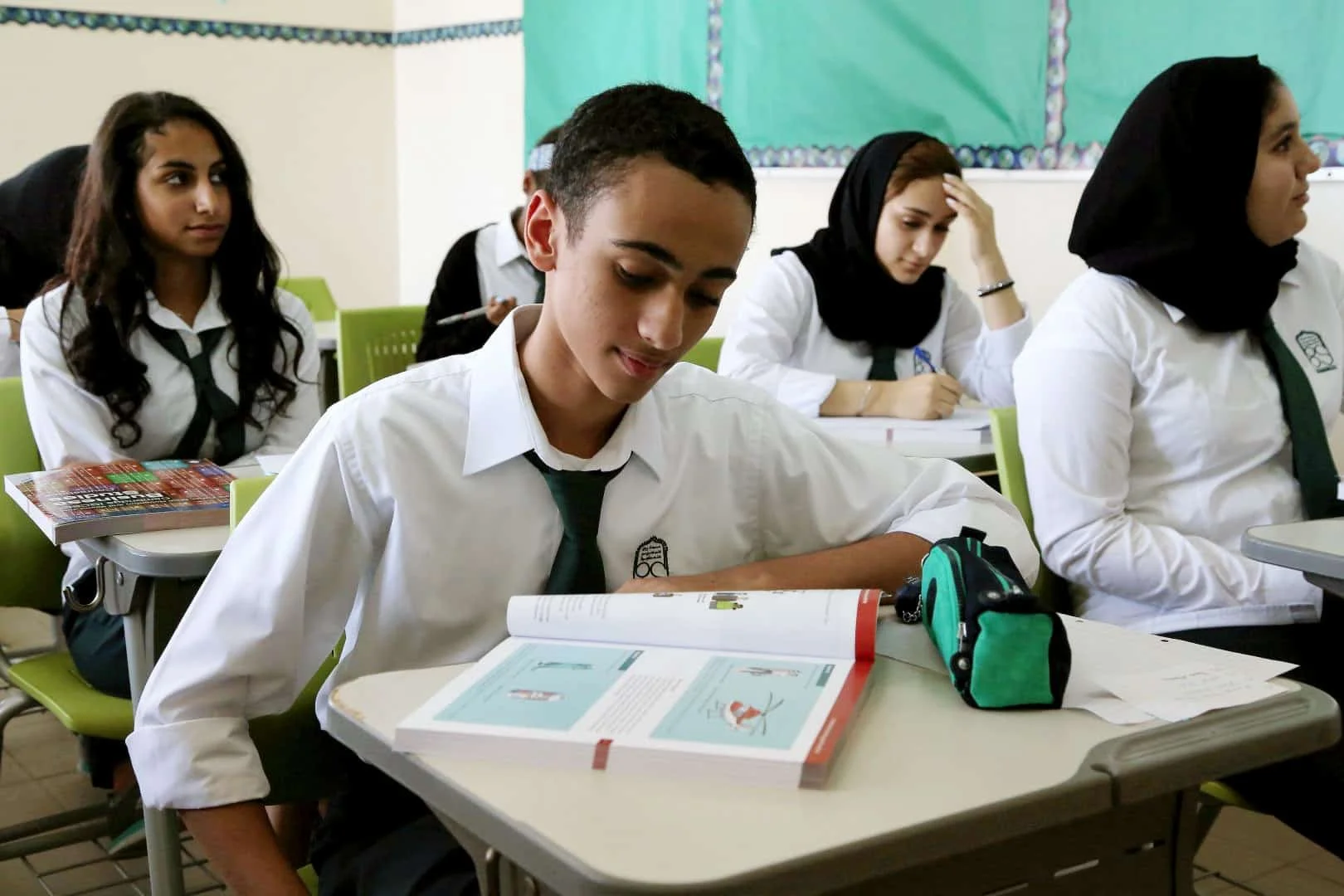
How Do You Honor your Identity in a Rapidly Changing World?
It’s hard enough to prepare young people for an AI-shaped future. But how do you do that while preserving their identity?What about strengthening that identity? Those are the stakes at Bahrain Bayan School, where most students are Bahraini and every decision about curriculum, technology, and student support is a decision about the country’s future. With AI advancing at an exponential rate, Bayan sought a solution in the Middle States Responsible AI in Learning (RAIL) endorsement in AI Literacy, Safety & Ethics. The end result? Bayan amplified their core identity using the endorsement’s implementation framework, called the Pace Layer Model.
Sleight of Hand
As 12th graders receive admissions notices from early decision and early action applications, I’m thinking about the role of prestige in college admissions.
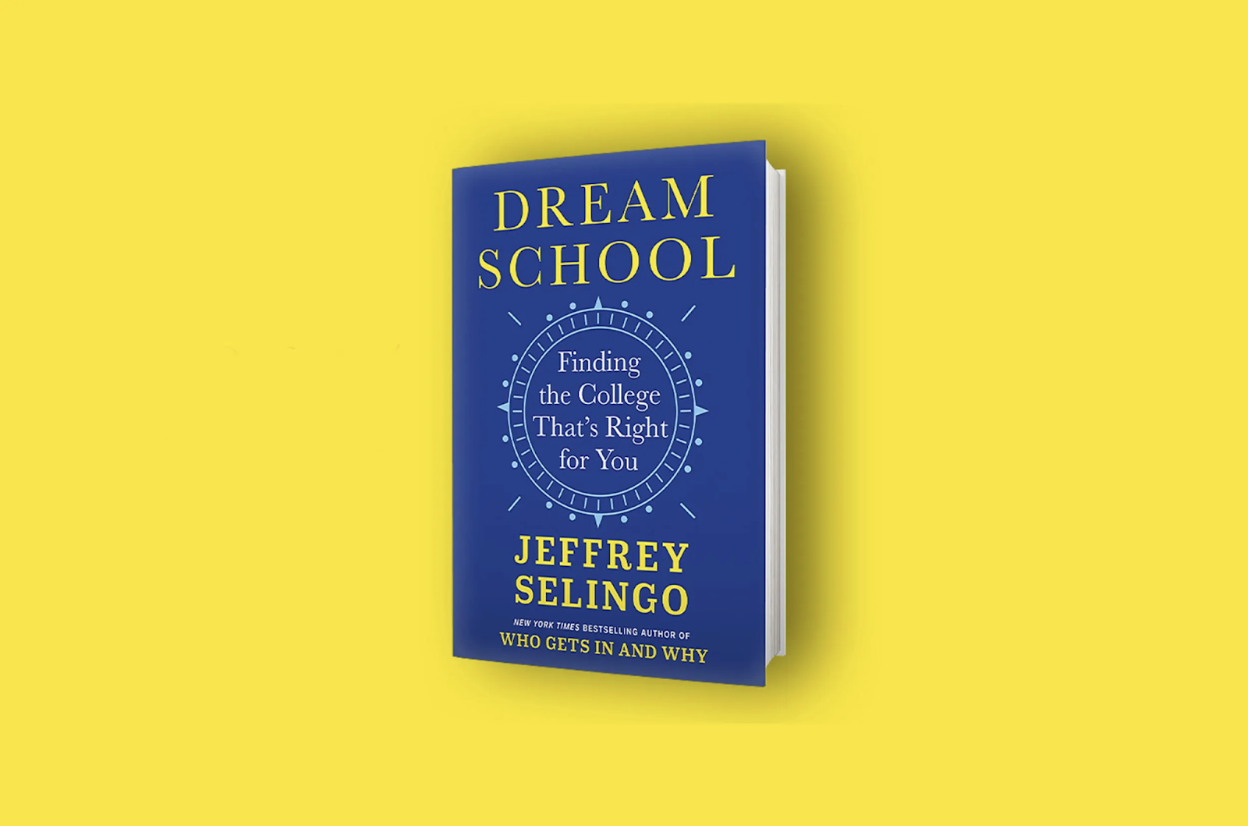
But I’m also thinking about it because last week I interviewed Jeff Selingo for Evolution Stories (episode to air in January).
Jeff’s latest best seller, Dream School, is a must-read on college admissions. It exposes the illusions of the prestige game while offering a playbook for thriving in college and beyond.

Fifteen schools. One Shared Purpose: Reimagining What Learning Can Look Like
In November, the Middle States Association accredited 15 microschools as part of our Next Generation Accreditation pilot. These schools might not have fit within a traditional accreditation model, yet they meet every one of MSA’s existing standards.
How? Through innovative models, adaptable practices, and deep purpose.
Back in October, I visited five of them across Tennessee. Here’s what I saw: