Blog

Making Space for Resistance: How Choate Rosemary Hall Built AI Adoption on Their Own Terms
Not everyone on faculty was on board — and that turned out to be an asset. Choate Rosemary Hall didn't try to eliminate resistance to AI. They made room for it, and built something more durable because of it.
Why AI Readiness Is About Culture, Not Code
In conversations with education leaders across the Middle States network, one question keeps coming up: “How do we embrace AI without sacrificing what makes learning deeply human?”
Globally, education leaders are grappling with similar AI readiness questions, as reflected in UNESCO’s comprehensive new anthology, AI and the Future of Education: Disruptions, Dilemmas and Directions (UNESCO, 2025).

Advancing Ethical AI In An Online School System
When your students are fully remote, AI oversight looks completely different. This school system couldn't rely on hallway conversations or classroom culture. They had to build ethical AI use into the structure itself.

Leading the Way: What the UAE’s AI Mandate Signals for Schools Everywhere
This year marks a turning point for education. For the 2025–26 academic year, the Ministry of Education in the UAE is implementing an Artificial Intelligence curriculum across all public schools (Rasheed, 2025).
The goal of this curriculum is to strengthen students’ abilities to apply AI technology in a “safe, ethical, and responsible manner” (Rasheed, 2025).

Leading With Process Before Product at Mt. Lebanon
Every vendor promised a solution. Mt. Lebanon's leadership knew that wasn't the problem. They slowed down to design the process — and that's what made the product choices actually stick district-wide.
Emerging from Stealth Mode: Middle States AI Fellows
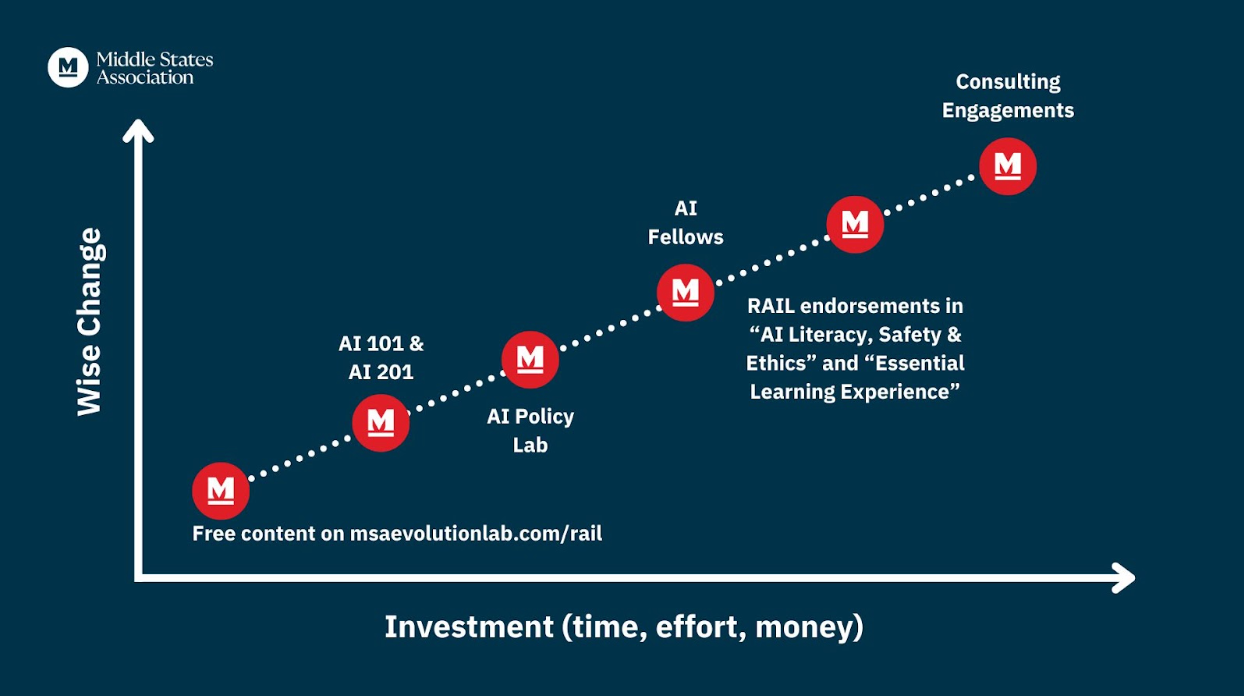
What if you aren’t ready for a full school commitment to AI? What do you do when only a few teachers are ready to lead the way? We have been working in stealth mode on something new to help schools adopt AI responsibly. It is an implementation framework that doubles as a community of practice. We call it AI Fellows.
International School of Lusaka’s Strategic Response to AI
When ChatGPT was released in late 2022, Dr. Liam Hammer had other priorities as the new Head of School of the International School of Lusaka. But as AI conversations intensified globally, the ISL board began pressing for immediate action. A board member had used ChatGPT to write an AI policy for the school and wanted to ratify that policy.

The EU AI Act Is Here: What Schools Must Do Now
While the White House's new AI Executive Order is making headlines, school leaders in the EU need to pay close attention to what's already in motion: the EU AI Act. Adopted in June 2024 and now entering into force, this landmark legislation formally recognizes schools as deployers of AI systems under Article 29—and that comes with real responsibility.

Why AI and What Is Middle States Doing About It?
Thirty years ago, many of my classmates reacted to the idea of co-existing with AI with a, “Yeah right.” Some of us reacted with, “What if…?” Today, we all have to ask, “What now?”