Making Space for Resistance: How Choate Rosemary Hall Built AI Adoption on Their Own Terms
Written By: Anju Shivaram, AI Project Manager, Middle States Association | Published December 1st, 2025
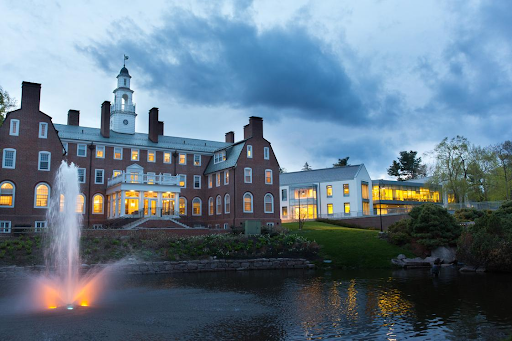
In 2023, Choate Rosemary Hall, an independent boarding school in Wallingford, Connecticut, faced the challenge every school was grappling with: how to respond to generative AI.
Like many schools, Choate had faculty across the spectrum. Some were experimenting enthusiastically. Others were deeply concerned. The easy path would have been to issue a quick policy and hope it settled things.
Instead, they chose a different approach, one grounded in their mission, built on trust, and designed to bring everyone along.
The Call from Leadership
In October 2023, Choate's leadership asked faculty to determine the school’s approach to AI, but with a critical detail: it needed to focus on engagement, not prohibition.
“One of the greatest benefits from my perspective was being told by our school leadership that we have full permission to engage the technology,” recalled Ellen Devine, Director of Studies and English Teacher, Chair of the AI Steering Committee.
That permission mattered enormously.
Starting With Values, Not Tools
For Ellen and the AI steering Committee she chaired, permission to engage came with a charge: to grapple with AI comprehensively.
“One of our core values is a dynamic balance between innovation and tradition,” explained Ellen. “And this is how we approached everything that had to do with AI.”
Rather than asking Which tools should we allow? they went deeper: What are we about as a school? What kind of thinking do we want to develop in students? What does intellectual integrity mean here?
From this foundation emerged their institutional stance: “Choate endorses a discerning, informed and ethical use of AI for faculty, students and staff.”
Trust and Accountability
Choate trusted their faculty, too. When they ran a session on using GPTs for report writing, almost 40 teachers attended, none of whom felt they were compromising their responsibilities.
Why? Because Choate had been clear about what remained sacred.
“Each faculty member is always responsible for the quality of the output of their work,” Ellen emphasized. “Having used a technological advancement to do your work does not absolve you of responsibility for the outcome.”
That trust and clarity about accountability fostered teacher confidence.
As further support, Choate offered optional paid summer work with multiple paths: reading books, asynchronous lessons, workshops.
The result? 80% of eligible faculty participated.
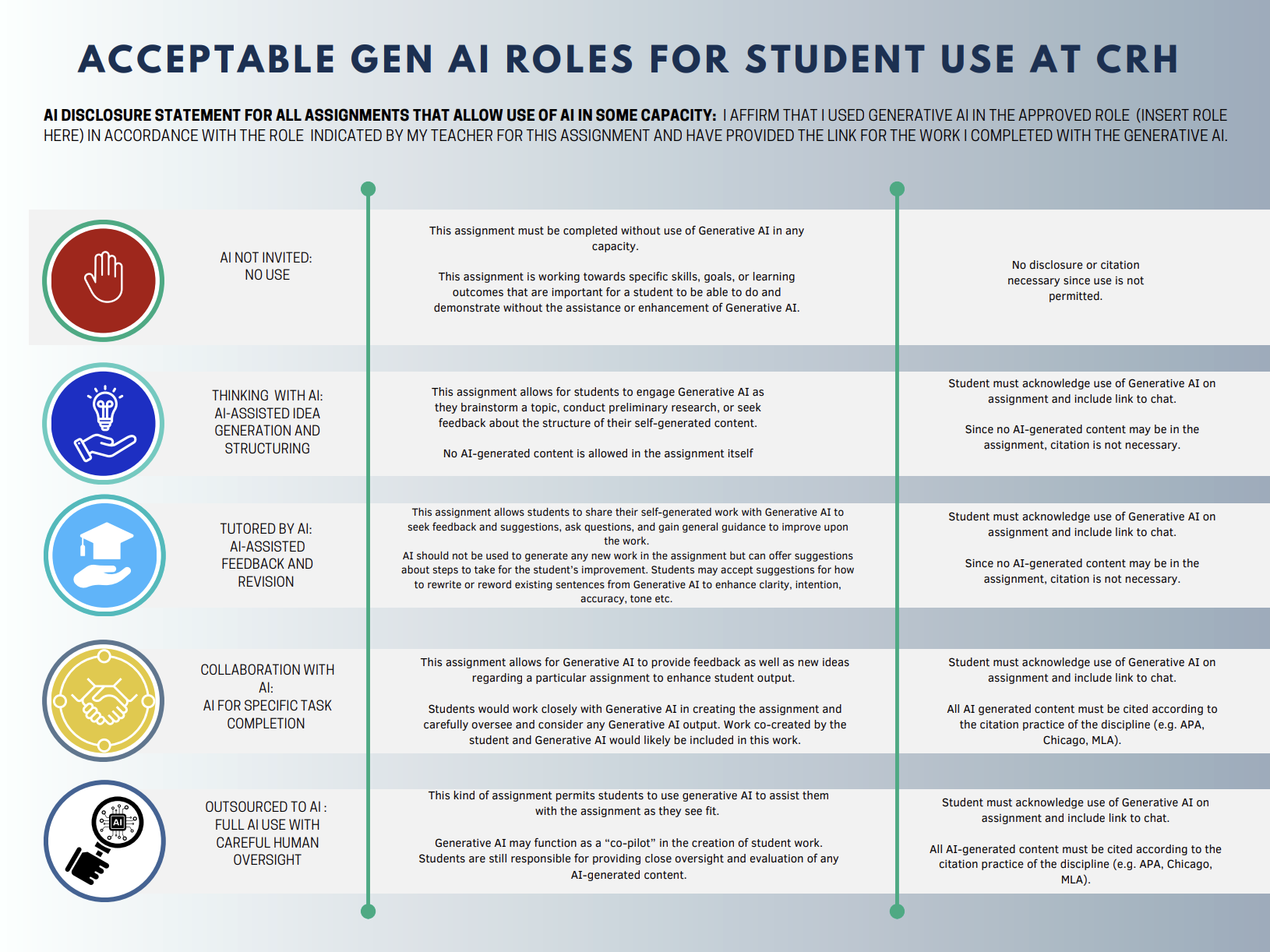
Source: https://www.choate.edu/ai/gen
What They Built
As teacher AI literacy reached a critical mass, Choate created “acceptable roles for AI use” for students (pictured), a chart focusing on different roles AI can play. After community feedback, they switched from numbers to hand icons to avoid unintended hierarchy.
As they developed their approach, Choate joined Middle States Association’s RAIL endorsement program for external validation.
As Ellen said, they wanted to ensure that “the kind of plane we’d been building while flying it was the kind of plane we would recommend building.”
What Other Schools Can Learn
Choate’s success extended beyond trusting their faculty—when the school included students in early conversations, they discovered something surprising.
Students weren’t asking for shortcuts. They were worried about inadvertently breaking rules they didn’t know existed yet.
“I didn’t come here not to learn,” one student said. “I could have gone somewhere less hard.”
Students wanted guidance, not loopholes. Their feedback is a reminder for all schools that communities want to do the right thing when given a clear direction.
Choate’s approach worked because:
Leadership gave both permission and resources.
Teachers started with values before tools.
The school trusted the community and moved deliberately, prioritizing bringing people along over moving fast.
Choate shows that you don’t need to have all the answers. As AI continues to evolve rapidly, schools should worry less about building the plane while flying it and more about building the right kind of plane.
Choate Rosemary Hall is an independent boarding and day school in Wallingford, Connecticut, serving approximately 865 students in grades 9-12 and postgraduate. The school completed the RAIL endorsement in AI Literacy, Safety & Ethics in 2024.
Want to learn more about RAIL? Visit msaevolutionlab.com/rail
Note: This article was developed with assistance from generative AI.
