
From AI Training to AI Policy: The K–12 Whac-a-Mole Problem
Written by: Christian Talbot, President Middle States Association | Published January 19th 2025
Have you ever played whac-a-mole?
The game used to be a mainstay of arcades and boardwalks.
One mole pops its head up.
You strike it with a mallet, which sends it underground.
But as soon as it disappears, a different mole pops up somewhere else on the gameboard.
Repeat until time runs out on the game.
AI in schools is a whac-a-mole problem. For example:
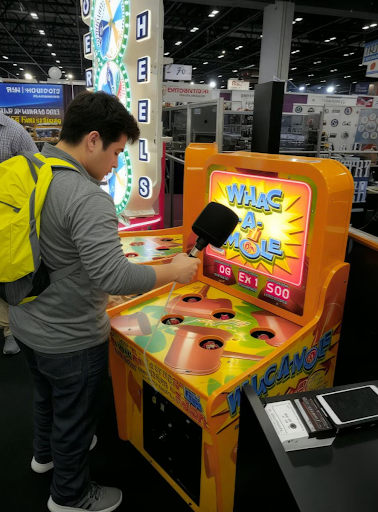
Image Source: Game Room Shop
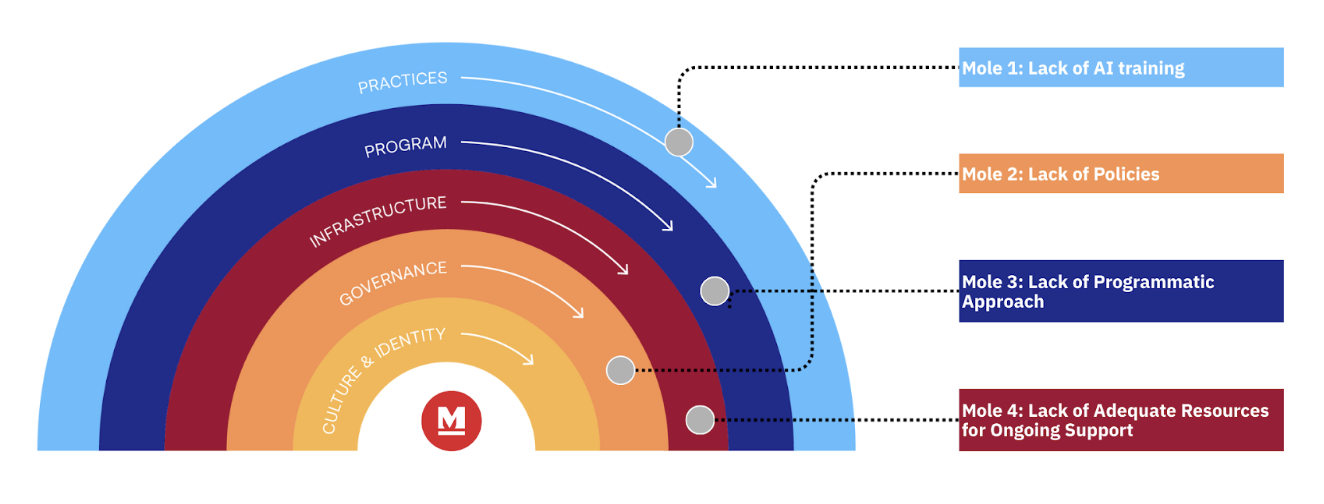
Mole 1: The students are using AI, but the teachers don’t have training on AI.
Whac 1: Your school does a professional learning session on an AI tool that can help teachers with lesson designs, assessment creation, formative feedback, etc.
That’s great, but..
Mole 2: One teacher points out, “What are our policies on academic integrity when it comes to AI?”
Whac 2: The school creates a policy task team to draft AI policies.
That’s great, but…
Mole 3: Another teacher points out, “We’ve only had one session on how to use AI. You can’t honestly expect that to be sufficient if you expect us to put that policy into practice.”
Whac 3: Your school hosts another professional learning session on AI for everyone, but also anticipating the next mole activates an early adopter team to race ahead to discover effective uses for AI in learning.
That’s great, but…
Mole 4: Parents say, “Why are only a handful of teachers using AI? My kid is being put at a disadvantage because he doesn’t have teachers using AI!”
Whac 4: Your school creates an AI elective.
That’s great, but… only a certain number of students can take the elective at any given time.
You get the idea.
To solve the whac-a-mole problem, you need to see the entire system.
That’s why we adapted Stewart Brand’s Pace Layer Model. It helps us understand why AI vexes schools: when you “whac” one AI mole, you are only touching part of a complex system.
Source: Middle States Association
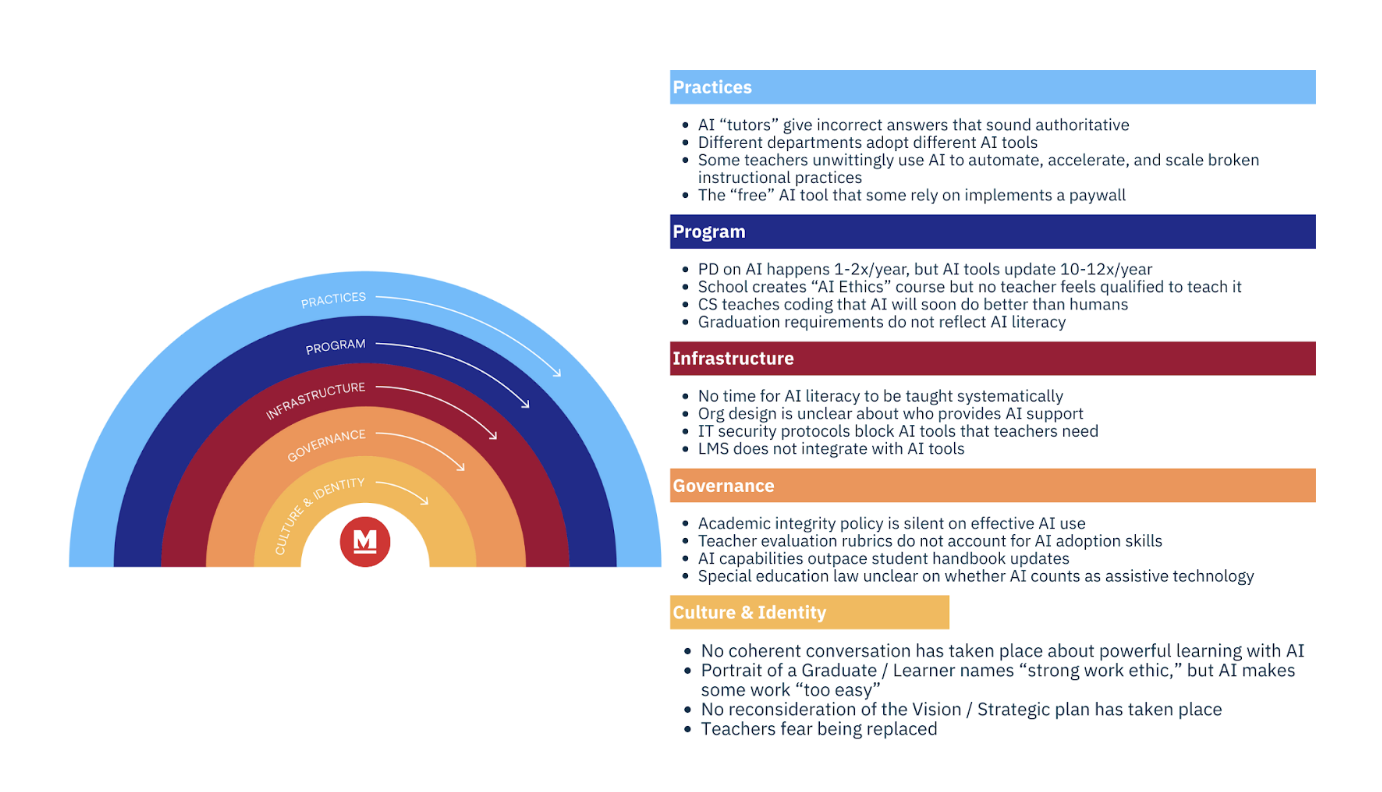
Here are a few more examples of AI “moles” that might pop up:
Source: Middle States Association
Solutions from vendors or consultants tend to be single “whacs” in the whac-a-mole game.
But when you finally see how AI affects the full system of your school, you can anticipate challenges. And when unexpected “moles” pop up, you can intervene quickly.
So what can your school do about the AI whac-a-mole problem?
Middle States has worked on this question with hundreds of schools around the world through our Responsible AI In Learning (RAIL) endorsements and our workshops.
Does your school need to implement an AI vision? → The RAIL endorsements in AI Literacy, Safety & Ethics and Essential Learning Experience with AI help you adopt AI in each layer in the Pace Layer Model. Learn more about RAIL here.
Does your school need to enable positive AI use and prevent harmful AI use? → AI Policy Lab helps you create coherence between your Culture & Identity and Governance layers so that teachers and students have the confidence to use AI in pursuit of powerful learning. AI Policy Lab launches in early 2026–join the waitlist!
Does your school need to understand the basics of AI before figuring out what to do with it? → AI 101 and AI 201 creates a strong baseline for faculty and staff by helping them to apply AI to projects and tasks that matter to them. Learn more about AI 101 AI and 201 here.
