 Image 1 of 2
 Image 2 of 2
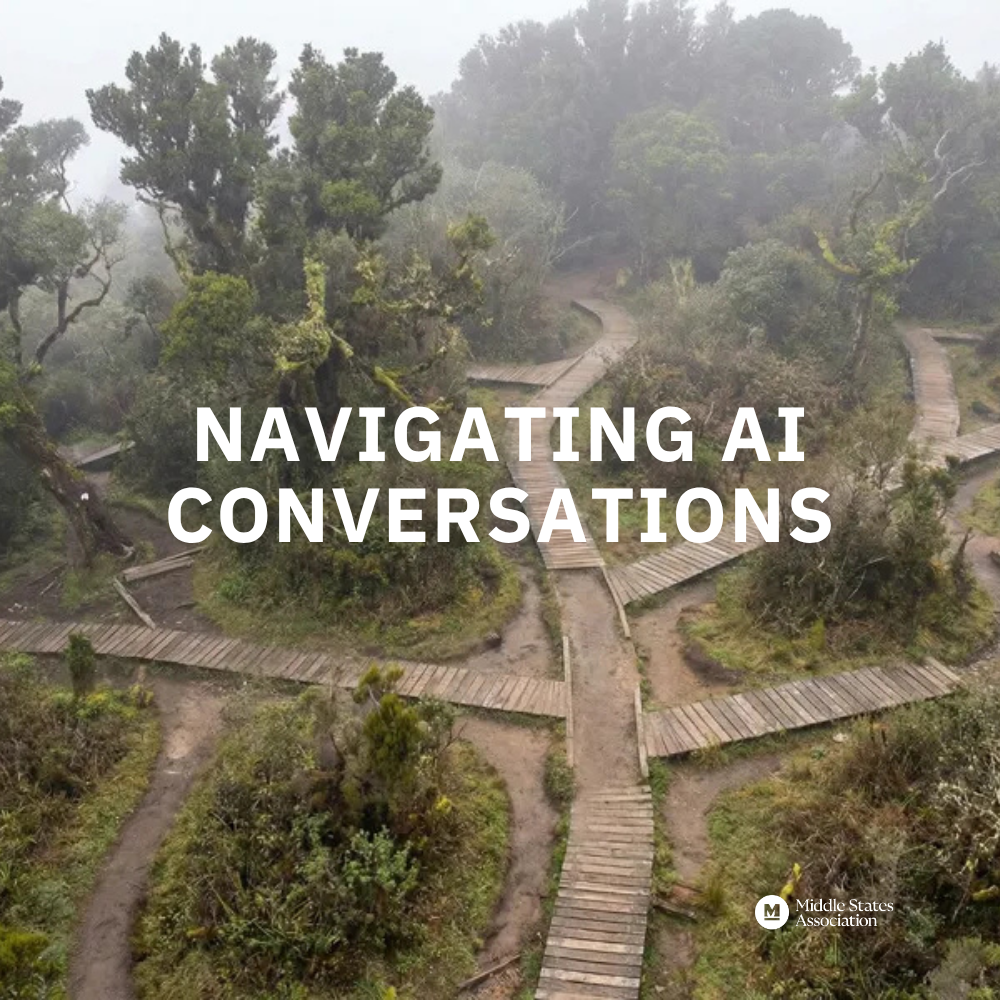
Emotions are high and knowledge about AI is often uneven in schools. Those are conditions for confusion instead of clarity and they show up in everyday conversations about academic integrity, offloading learning, and environmental impact. This course is built on a simple premise: these conversations are more complicated than they seem. The aim is to get beyond AI “sides,” recognizing that each pole is right, to some degree, some of the time. The challenge is not choosing a side—it’s learning how to navigate the tension.
You will examine common misconceptions and real risks, and clarify what actually needs to be managed, not avoided. From there, the work turns practical: how to have the conversation with the colleague or stakeholder who sees it differently.
Through AI-supported role-play, you will practice those conversations and leave with a concrete next step—a plan or artifact to improve AI dialogue in your context.
Teachers, administrators, and leaders.
The asset you will develop through this course is a plan or practical artifact to improve AI-related dialogue with stakeholders in your school.
The skills you will develop in this course:
Navigate AI conversations with nuance and accuracy
Move discussions beyond positions toward shared understanding
Respond constructively to common concerns and misconceptions
Tools for navigating difficult AI conversations
Reference guides related to each module
AI-powered simulation prompts for practice discussions
Introduction
Module 1: Academic Integrity
Module 2: Offloading Thinking
Module 3: Environmental Concerns
Module 4: Final Project
Estimated time to completion is 3.5 hours
3-months
Upon successful completion of this course, you will receive a digital certificate and badge. This digital certificate links to a webpage outlining the learning outcomes covered in the workshop. You can display your certificates on LinkedIn or your CV. You can also share it directly with your school or prospective employers.
Tim Dasey, Ph.D.
Dr. Tim Dasey is one of the few who were involved in the entire AI neural network arc. In graduate school in the 80s he developed AI for neuroscience modeling and analysis, and studied learning and thinking in both AI and brains. For decades Tim led diverse MIT R&D groups requiring deep expertise in AI, strategy, game-based learning, and organizational change. He now helps education at all levels with AI strategy, curriculum, and training, and is a sought-after speaker. This course is based on aspects of Tim’s books and writings:
Wisdom Factories: AI, Games, and the Education of a Modern Worker (2023)
AI Wisdom Volume 1: Meta-Principles of Thinking and Learning (2025)
AI Wisdom Volume 2: Meta-Principles of Interaction (coming Spring 2026)
AI Wisdom Volume 3: Meta-Principles of Stewardship (est. late 2026)
Sweet GrAIpes Substack (timdasey.substack.com)
More information about Tim is available at timdasey.com/about.
Emotions are high and knowledge about AI is often uneven in schools. Those are conditions for confusion instead of clarity and they show up in everyday conversations about academic integrity, offloading learning, and environmental impact. This course is built on a simple premise: these conversations are more complicated than they seem. The aim is to get beyond AI “sides,” recognizing that each pole is right, to some degree, some of the time. The challenge is not choosing a side—it’s learning how to navigate the tension.
You will examine common misconceptions and real risks, and clarify what actually needs to be managed, not avoided. From there, the work turns practical: how to have the conversation with the colleague or stakeholder who sees it differently.
Through AI-supported role-play, you will practice those conversations and leave with a concrete next step—a plan or artifact to improve AI dialogue in your context.
Teachers, administrators, and leaders.
The asset you will develop through this course is a plan or practical artifact to improve AI-related dialogue with stakeholders in your school.
The skills you will develop in this course:
Navigate AI conversations with nuance and accuracy
Move discussions beyond positions toward shared understanding
Respond constructively to common concerns and misconceptions
Tools for navigating difficult AI conversations
Reference guides related to each module
AI-powered simulation prompts for practice discussions
Introduction
Module 1: Academic Integrity
Module 2: Offloading Thinking
Module 3: Environmental Concerns
Module 4: Final Project
Estimated time to completion is 3.5 hours
3-months
Upon successful completion of this course, you will receive a digital certificate and badge. This digital certificate links to a webpage outlining the learning outcomes covered in the workshop. You can display your certificates on LinkedIn or your CV. You can also share it directly with your school or prospective employers.
Tim Dasey, Ph.D.
Dr. Tim Dasey is one of the few who were involved in the entire AI neural network arc. In graduate school in the 80s he developed AI for neuroscience modeling and analysis, and studied learning and thinking in both AI and brains. For decades Tim led diverse MIT R&D groups requiring deep expertise in AI, strategy, game-based learning, and organizational change. He now helps education at all levels with AI strategy, curriculum, and training, and is a sought-after speaker. This course is based on aspects of Tim’s books and writings:
Wisdom Factories: AI, Games, and the Education of a Modern Worker (2023)
AI Wisdom Volume 1: Meta-Principles of Thinking and Learning (2025)
AI Wisdom Volume 2: Meta-Principles of Interaction (coming Spring 2026)
AI Wisdom Volume 3: Meta-Principles of Stewardship (est. late 2026)
Sweet GrAIpes Substack (timdasey.substack.com)
More information about Tim is available at timdasey.com/about.