
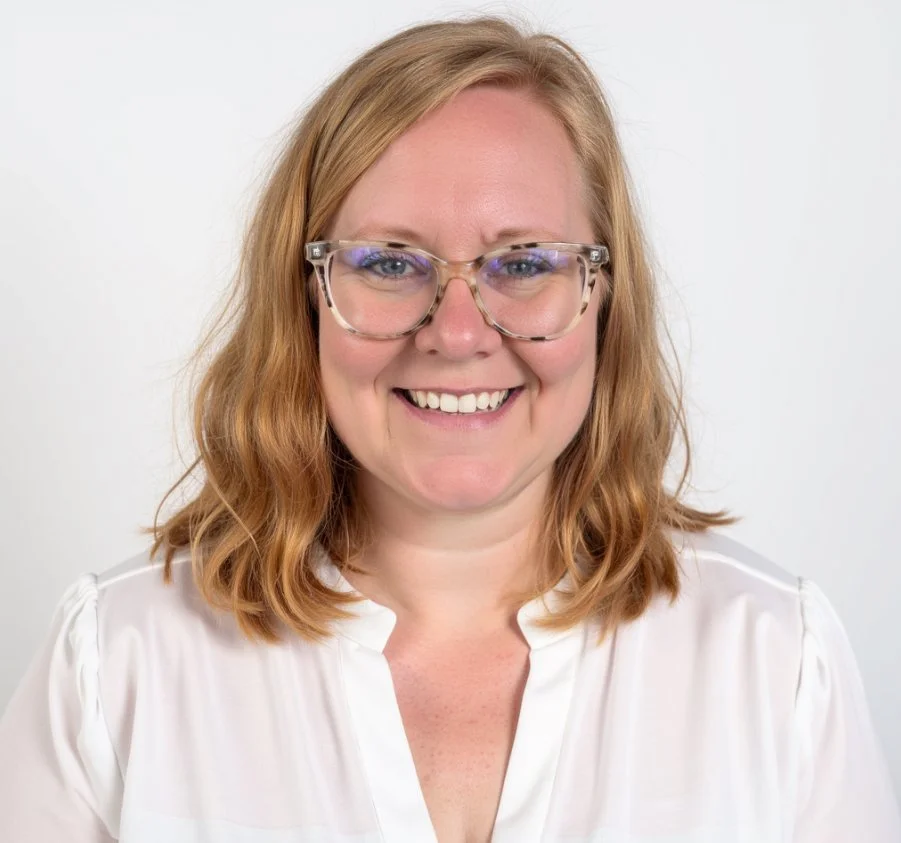
Jill Haskins, Founder & Director Kainos Microschool
MSA: Tell us a little about yourself. How did you land in the world of education and what has your journey entailed?
Jill: From the time I was little, I knew I wanted to be a teacher, so it was only natural that I entered into education as profession. I taught in public school for just a few years, and then my husband and I started a family. I left teaching to raise our children. When our two oldest children became school age, we enrolled them in public school. However, because my husband worked mostly nights and weekends, the traditional school schedule did not allow our family to function and we knew we needed to make a change. That is when we decided that I would homeschool. When my youngest son turned 7, and it was time to start educating him at home, we very quickly discovered that he needed something different than his older siblings. So we began looking for non-traditional options that would serve his unique needs (turns out he is profoundly dyslexic) but still accommodate our very non-traditional schedule. That is how I was introduced to the concept of microschooling.
In 2020, I began working at a microschool as a classroom teacher and in just a few short years, took over leadership of that microschool. I left that microschool in May 2024 I left that microschool. After leaving, I opened my own school, Kainos Microschool, in January 2025 in my living room with 11. In August 2025, Kainos opened its doors in a commercial space with 25 students and a staff of 4.
MSA: Thanks for sharing that with us. What motivates you to work in the field of education?
Jill: Education feels like a calling for me. I’m motivated by the belief that every student deserves a supportive, engaging environment where they can thrive. Being part of creating that environment academically, socially, and emotionally, inspires me every day. Working in innovative education provides a constant opportunity to grow, adapt, and innovate. Education is always evolving, and I love working in a field where I can bring creativity to learning experiences, solve real problems, and help prepare students for a changing world.
MSA: Describe a specific change project you have been a part of. What were the main obstacles? How did you overcome them?
Jill: When I launched Kainos Microschool, it was a full-scale change project that required rethinking how education could be delivered in a microschool model. One of the biggest obstacles was navigating the uncertainty that comes with building something new. It required that I create systems, structures, and culture from the ground up while earning the trust of families. Many people were unfamiliar with the microschool concept, so clearly communicating the vision and helping families understand what made Kainos distinct was essential.
Another major challenge was operational. It required that I secure a suitable facility, create a sustainable yet accessible budget with enrollment projections, and establish policies that balanced flexibility with structure. Each phase required extensive planning, problem-solving, and a willingness to adjust as I learned what worked and what didn’t.
I overcame these obstacles through consistent communication, community-building, and persistence. I sought out mentors and other microschool founders, listened closely to families’ needs, and iterated quickly based on feedback. I also stayed anchored to the mission of creating a safe, relational, academically strong environment for students, which helped guide decisions even when obstacles felt overwhelming. In the end, the ability to stay adaptable, transparent, and mission-focused allowed Kainos to launch well and grow in a healthy, sustainable way.
MSA: What does "learning in community" mean to you? How do you stay connected and in-the-know about all things education?
Jill: To me, “learning in community” means that education is not something we do in isolation. It thrives when students, families, and educators are actively connected, supporting one another, and sharing responsibility for students growth and success. In the microschooling movement, this idea is especially important. Learning in community means creating an environment where students feel known, valued, and engaged, where families are partners in their child's education, and where educators collaborate rather than operate in silos. It’s about cultivating belonging and leveraging the strengths of the whole community to enrich learning.
Staying connected and “in-the-know” about all things education is essential to the vision of Kainos. I make it a priority to stay engaged with the larger microschooling network, participating in founder forums, attending workshops and statewide gatherings, and contributing to conversations with other innovative leaders across Indiana and beyond. I also follow current research, trends, and policy developments in education, especially those impacting school choice, personalized learning, and alternative models. By staying curious, connected, and active in these conversations, I’m able to bring fresh ideas back to my own community and continue growing alongside the wider movement.

MSA: What is one thing about the current state of education that worries you or excites you?
Jill: One of the most exciting things about the current state of education is the growing recognition that learning can’t be one-size-fits-all. Parents, teachers, and communities are realizing that students need personalized pathways, teachers need the freedom to teach in ways that truly serve their learners, and families deserve meaningful choice in their children’s education.
Because these needs are becoming impossible to ignore, people aren’t waiting for traditional systems to change. They’re stepping up and creating the solutions themselves. There’s a renewed sense of momentum and permissionlessness, driven by the urgency to do what’s best for students now, not years from now.
As a result, students are gaining access to learning experiences that reflect their strengths, interests, and needs and it's all supported by engaged parents, empowered educators, and connected communities. The innovation happening across the landscape is both inspiring and deeply hopeful.
MSA: Thank you for sharing your change story with us Jill
Contact: Jill@kainosmicroschool.com
