
When Thinking becomes the Work: Excellence in Learning at American School of Milan
Written by: Tara Waudby, VP of Evolution Academy, Middle States Association | Published April 1st 2026
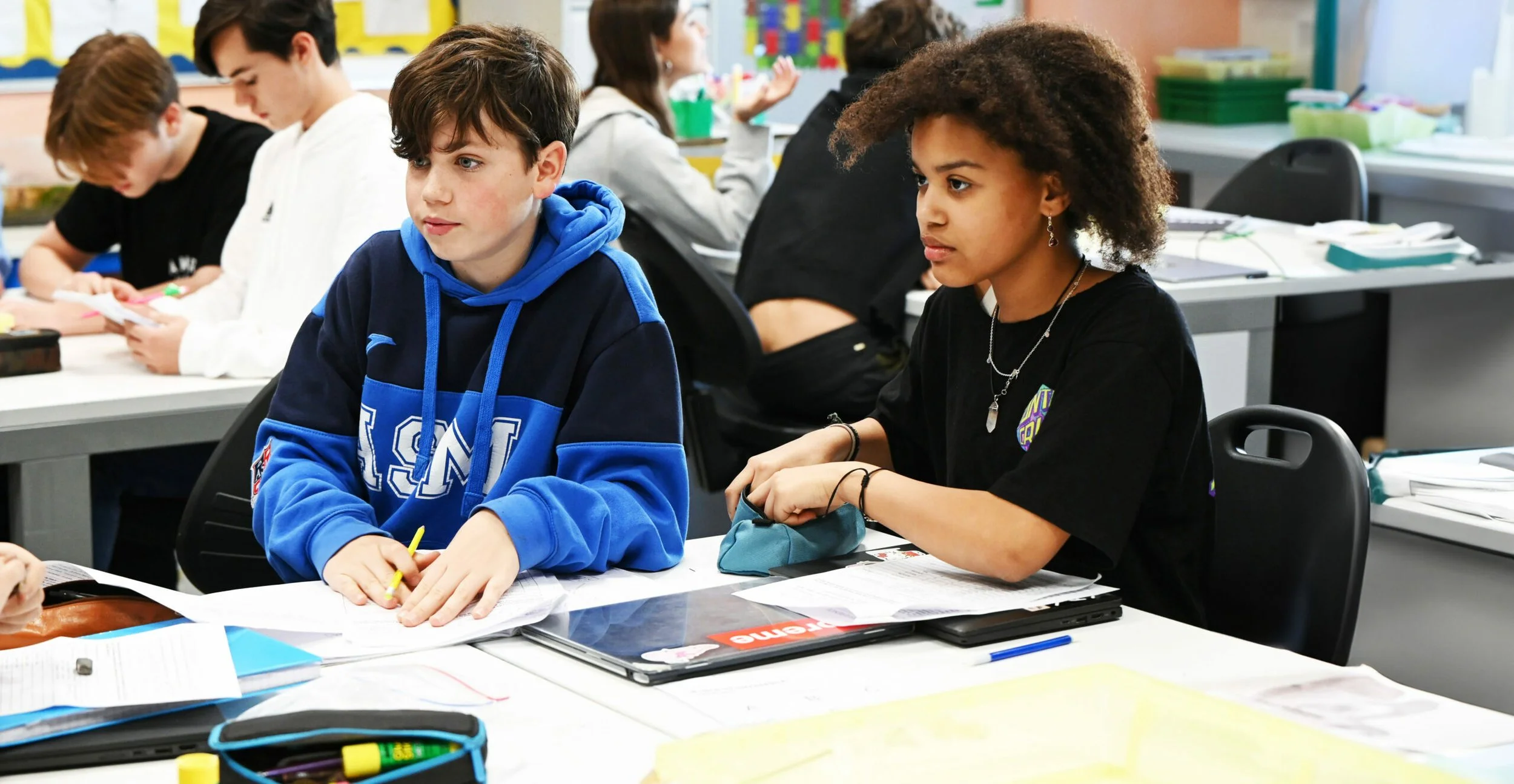
Challenge: Accreditation was typically led by a designated planning team, leaving most faculty peripherally involved even as the school sought to live its mission of developing curious learners and critical thinkers.
Approach: ASM chose the MSA Sustaining Excellence pathway to elevate reaccreditation into a rigorous, multi-year, whole-faculty action research project centered on the question “How do Making Thinking Visible practices impact students’ dispositions to be critical thinkers and curious learners?” The project involved integrating visible thinking routines and, later, AI-assisted data analysis to protect teacher time for pedagogy and learning.
Results: Accreditation served as an accelerator for mission-driven growth. Professional collaboration is now more firmly embedded through co-planning and peer observation, supported by a shared language for thinking and clear student expectations for curiosity, critical thinking, and powerful learning, illustrating what becomes possible when accreditation is used as a catalyst for sustained, mission-aligned inquiry.
Starting with a Question, Not a Plan
The question posed at the American School of Milan (ASM) at the start of their last reaccreditation cycle stemmed from the desire to measure how they were delivering on their mission statement ‘to develop curious learners and critical thinkers.’ While they were already exploring visible thinking routines as a faculty, they wanted a systemic and sustainable approach to implementation. At the same time, they wanted an accreditation process that engaged everyone, not just a small team within the school. Therefore, they developed the central research question, “How do Making Thinking Visible practices impact students’ dispositions to be critical thinkers and curious learners?”
From Isolated Practice to Shared Purpose
Thus began the MSA Sustaining Excellence journey for ASM. Sustaining Excellence takes accreditation to a new level by engaging staff in action research and allowing them to showcase their work in a community colloquium. At ASM, it served as a launching point for creativity, collaboration, and critical thinking.
Jane Segre, Director of Teaching and Learning, remarked that she appreciated the flexibility of the protocol because they could investigate whatever they wanted. They began with a central question and divided into eleven teams across the school from Early Childhood to grade 12 to investigate either curiosity or critical thinking.
Three years later, the library was buzzing with collaborative dialogue as over 100 teachers came together across divisions to discuss concept maps created by their students focused on the original question: “What is thinking? When you tell someone you are thinking, what kinds of things are going on in your head?”
Iteration, Learning and Failure
“We've been given freedom to do it how we wanted to do it, the responsibility to say, ‘oh no, that’s not working’ and the ability to change along the way.”
The process was an iterative journey with lots of learning along the way. Their exploration produced many wonderful results including initiating a co-planning and peer observation model that allowed teachers sustained and systematic collaboration time. Teachers across plan learning experiences and then observe one another. During the school year 2024-2025 alone, they conducted 126 peer observations, and it wasn’t simply watching a peer teach, it was watching a lesson in action that colleagues had helped develop. The model was so successful that they have included it as part of their planning and scheduling structures.
Some iterations also failed. One early misstep was a data collection process that shifted teacher energy toward managing information rather than refining visible-thinking practices and nurturing curiosity and critical thinking. Fortunately, ASM’s earlier investment in the Responsible AI in Learning endorsement had already built capacity for reflective practice and thoughtful use of AI tools. Leveraging that foundation, the school used AI to streamline analysis, freeing teachers to spend their time where it mattered: planning learning, observing thinking in action, and deepening their own understanding of how students make their thinking visible.
Celebration as a Learning Practice
The school recognized the need for ongoing celebration and showcasing along the way, sharing great practices and successes across their teaching teams and divisions.
The Sustaining Excellence protocol served as a holistic process that achieved both aims the school had wished for:
1. Meeting their Mission by fostering critical thinkers and curious learners, and
2. Engaging their entire faculty in the reaccreditation process through action research.
Additionally, they experienced powerful growth along the way and developed a collaborative culture and shared understanding about learning.
“We have developed a common language among our teachers around what thinking is and an engaging pedagogy around how we can get students to show their thinking. And once we’ve seen their thinking, what are we, as teachers, going to do next to push them even further. And that has been, I think, a powerful, powerful way to spend the last three years.”
Outcomes Embedded in Practice
● Shared, school-wide language for thinking and learning as a result of full faculty engagement in action research
● Sustained co-planning and collaborative inquiry across divisions—supported by smarter use of AI to streamline analysis and refocus teacher time on pedagogy
● Clear evidence of mission alignment: students increasingly able to make their thinking visible and demonstrate curiosity in their learning
From Accreditation to Ongoing Evolution
With strong structures now in place and a shared understanding of how students demonstrate thinking, ASM is shifting its focus toward amplification of student voice. The next phase of their work includes inviting student journalists to review the results and document the process because, ultimately, it's about them and their learning journey. The school will also host a community colloquium in spring 2027 sharing insights, evidence, and questions that emerged from this work—extending the inquiry beyond accreditation and into ongoing evolution.
A Catalyst for Wise Change
Stories like ASM’s remind us that accreditation is so much more than a checkpoint. It is a catalyst for meaningful, sustained growth. If your school is exploring how to align mission, pedagogy, and professional learning in ways that honor your unique context, the MSA Sustaining Excellence pathway offers a structure for inquiry, reflection, and wise change. What began at ASM with a question has grown into a shared way of working, learning, and thinking together. ASM reminds us that when a school commits to ongoing inquiry, accreditation can become a powerful reflection of its mission.
The American School of Milan (ASM) is a prominent, independent, co-educational, not-for-profit day school founded in 1962 to provide an Anglo-American education to international families. Located on a 9-acre campus in Noverasco di Opera, just south of Milan, Italy, the school serves students from early childhood through grade 12. ASM is renowned as a rigorous, technology-focused IB World School, where English is the language of instruction.
