
“I Don’t Know What I Don’t Know”: How One Indiana Founder Turned a Scrappy Microschool into Something Built to Last
Written by: Jake Galloway, AVP of Membership, Middle States | Published June 2, 2026
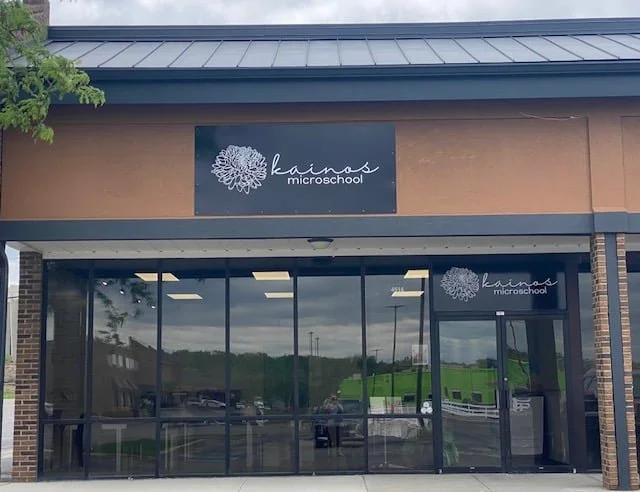
Challenge: A first-year Indiana microschool founder was juggling multiple jobs, surviving decision by decision, and couldn’t imagine adding accreditation to a plate that was already breaking.
Approach: MSA’s NGA Micro self-study forced a zoom-out from daily survival, surfacing critical gaps in financial planning while confirming what was already strong.
Results: Jill built a real financial foundation for the first time -- CPA, bookkeeper, financial planner, SBA loan -- and went from juggling five roles to working solely at her school. But the shift she named first was personal: confidence that what she’s building is real.
When you’re a microschool founder, you’re the janitor, the teacher, the marketer, and the bookkeeper. You’re making decisions day by day just to keep the lights on. The last thing you need is one more process.
You’re Going to Have to Convince Me
Jill Haskins didn't set out to start a school. Her youngest son is dyslexic, and he was falling further and further behind at another local microschool. "He's 14. I don't have time to waste." So she pulled him out, started tag-teaming homeschool with another parent, and within months had 11 kids in her living room. That became Kainos Academy -- a faith-based microschool in Indiana that launched in January 2025.
Jill built Kainos as a non-accredited, non-public school - the Indiana designation that gives founders complete freedom from state oversight. That freedom was central to her model. She'd spent five years at another microschool where she loved the teaching, but the back end was, in her words, horrible. She wasn't going back to anyone else's system.
So when a colleague pointed her toward an MSA representative at a conference, she didn't mince words. "You're going to have to really convince me that accreditation should be a thing I should consider."
What she expected was a pitch. What she got was questions. In a quick 10-minute conversation, the MSA rep asked about her concerns, how her school operated, and what flexibility mattered most to her model. He wasn't trying to sell her on accreditation. He was trying to understand what she'd built. That surprised her - and it cracked the door open.
It didn't swing wide right away. Jill was in the green by $60 in her first month and already working full-time at another organization while contracting for three more. She didn't have the bandwidth, the budget, or the patience for one more thing.
But the conversation with MSA had shifted something. A mentor pointed out that accreditation would open access to SGO scholarship funding. Parents were starting to ask. And underneath all of it, Jill knew something she couldn't ignore: she'd built everything alone. Every handbook, every policy - written without a business lawyer, without anyone qualified looking over her shoulder.
Being a microschool leader is lonely work, and Jill had been doing it long enough to know that lonely work has blind spots. She wasn't looking for someone to tell her what to do. She was looking for a mirror to guide her reflective process
"I love having the control of my program," she said, "but I also know that I don't know what I don't know."
She called MSA back. "Fine," she said. “Let’s do this.”
Getting Out of the Day-to-Day
The self-study turned out to be the thing Jill didn't know she needed. Governance, academics, and student well-being all felt strong - confirmation that the instincts she'd built over years of microschool work were sound. But the process also held up a mirror to the one area no one had trained her for: the financial foundation underneath everything else.
"The financial piece, unfortunately, is such a major piece to what we're doing. We can't survive without that being in order."
Like many microschool founders, Jill had gone to school to become an educator, not a business owner. The self-study didn't tell her she was failing. It showed her that the part of the school she'd had the least support building was the part that would determine whether Kainos could last.
Throughout the process, the MSA team was responsive and honest. When she reached out with a question, she always received a quick response. The visiting team named what was strong alongside what needed attention and offered suggestions from their own experience. It never felt like an inspection. "It was more like they were walking alongside you," Jill said, "rather than telling you that you suck at this."
But the deeper shift wasn't about any single policy or document. It was about perspective. The financial questions forced Jill to see her school not just as a classroom but as a business that needed to support it. For the first time, she could see the whole picture.
"So many of us microschool leaders are decision by decision because we're just surviving," she said. "It took my head out of the day-to-day."
Something That’ll Last
Once Jill could see the whole picture, she started building the parts that had been missing. She found a CPA, a financial planner, and a bookkeeper. She secured an SBA loan. She built out financial projections, clarified her tuition model, and raised pricing -- something that felt defensible now that the numbers were transparent. The foundation she'd never been trained to build was finally in place.
Everything else followed. Jill went from juggling five jobs to working solely at Kainos. Enrollment is doubling next year. Over the coming months, the school is moving from a 1,400-square-foot building to a 14,000-square-foot facility.
But the shift Jill experienced first wasn't operational. It was deeper than that.
"This is newfound confidence. The process confirmed things in me as a school leader that were out there, but I didn't believe."
The experience was validating beyond the school itself - as a leader, as a woman, even as a mom. Jill tells her students every day that they can do hard things. She was already doing them - building a school from her living room, keeping the lights on by sheer will. What accreditation gave her wasn't the ability to do hard things. It was the clarity to see that she'd been doing them all along, and the foundation to keep going.
"What feels like ‘one more thing’ actually is really life-giving. It's just given me a better understanding about how to create something that'll last beyond me."
Questions for Your Own School
What part of your school have you had the least support building -- and what would it mean to discover that before it becomes a problem? Not from someone telling you how to run your school, but from a process that helps you see what's already strong and what still needs a foundation underneath it.
To learn what MSA accreditation can make possible at your school, use this tool to find your best-fit accreditation pathway.
Kainos Microschool is an accredited, Christian faith-based, non-traditional school for grades 1–12, primarily located in Fort Wayne, Indiana. It operates as a "modern one-room schoolhouse" designed for personalized learning, catering to students who often struggle in conventional academic environments, including those with ADHD, dyslexia, and high-functioning autism.
